
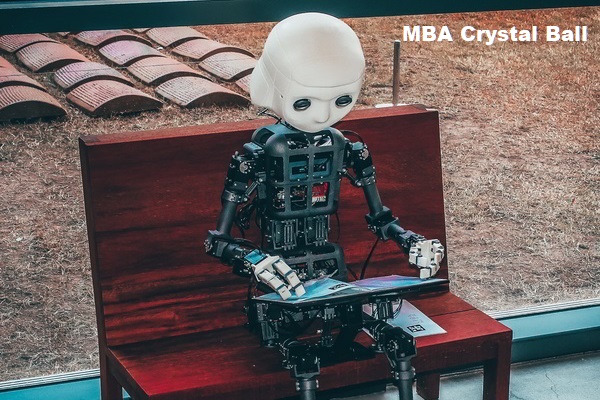
Since its launch in late November 2022, ChatGPT has been compared to smartphones, COVID-19, and the printing press. All three analogies highlight how new AI is destined to completely change the way we experience and interact with the world.
How ChatGPT is changing the game
The generative AI word predictor, ChatGPT, can speak multiple languages, including python and crochet but along with the hype, there is a flip side. Outputs often appear surprisingly correct, but ChatGPT misses or skews key details.
It has passed the Wharton MBA exam and a medical exam. But, it has also been called out for providing incorrect medical advice in lifestyle magazines.
Between the big tech hype and the doomsday fear, what could generative AI mean for the future of universities?
How are different institutions responding to ChatGPT
The emergence of ChatGPT has elicited a full spectrum of responses across the education sector. Is it an unparalleled cheating machine, creating a new market for plagiarism detectors and adversarial academic/student relationships? Or is it a useful new tool for learning?
Facilitated online conversations, curriculum-based classes, advisory boards, ethics committees and outright bans have formed part of the response to ChatGPT. A top French university, Sciences Po, has banned using the chatbot.
The Chinese government, with state-controlled firewalls, has declared it illegal to access the tool. New York, Seattle, LA and Washington public school systems have also banned access from school-owned networks and devices.
According to Robert Cummings, executive director of academic innovation and associate professor at the University of Mississippi, “It’s a disruption for higher ed because it’s a disruption to fundamental human literacy. We could reasonably assume whenever we read text that there was a human involved [in previous years]. We’re past that now.”
 “ChatGPT and other artificial intelligence tools are here to stay, and are being integrated into our lives more and more every day. In the classroom we must continue to emphasize the importance of critical thinking. AI tools may help generate and organize information, and maybe that will create more opportunities for students to focus on critical thought.”
“One idea that I have shamelessly borrowed from one of our faculty members is using AI to generate themes from large volumes of evaluation data. I still think it’s important to read every word of each evaluation. At the same time, generating themes seems to be a well-suited task for AI tools. But the same thought about critical thinking applies to us as leaders. We shouldn’t expect the tools to do that work for us.”
– Brian Mitchell, Associate Dean, Full-Time MBA Programs, Emory University’s Goizueta Business School
Working with AI
New York Times technology columnist, Kevin Roost, recommends embracing ChatGPT, “Instead of starting an endless game of whack-a-mole against an ever-expanding army of A.I. chatbots”.
One example of quick adoption of the tech is a Boston University undergrad class that took on the challenge and devised a 550-word ethics policy for use of generative AI. The lecturer threw out the planned curriculum for the first run of his Data, Ethics, and Society unit two days before the course started.
While the response from different institutions varies there’s a statement that reappears. Commentators note the need to provide training in using ChatGPT as a requirement to prepare for the job market.
In an era of sustained cuts to higher education, is this one more pivot away from higher education’s lofty goals? Consider founding mottos like: Cambridge’s Hinc lucem et pocula sacra (From here, light and sacred draughts); McGill’s Grandescunt aucta labore (By work all things increase and grow); and Harvard’s Veritas (Truth).
Are the foundations and the purpose of post-secondary education fundamentally shifting? I asked ChatGPT what its higher education motto would be. The answer perfectly follows the expected format, but contributes little of substance:
Or, is it time to reconsider elitist notions associated with tertiary studies? Louis Chude-Sokei, director of the CAS African American & Black Diaspora Studies Program, advises “It’s important to look at the social and cultural context of how society responds to new technology.” He compares the response to ChatGPT now to earlier, more subdued, responses to new tech.
For example, when automation was considered to be mainly a threat to blue-collar workers. Chude-Sokei suggests, “This fear is different and likely to be taken more seriously because it’s now seen as a threat to white-collar labor and intellectual, so-called ‘higher’ cultural production”.
Also read: Artificial Intelligence Vs Machine Learning Vs Data Science Vs Deep learning
Concerns regarding ChatGPT
In an effort to mitigate the fallout from a complete overhaul of education systems, OpenAI are developing software to detect whether work was created with their other software. Detecting ChatGPT plagiarism is complicated and early results do not look promising.
Time interviewed Mira Murati, OpenAI’s chief technoloogist in February 2023. Murati calls for extensive cross-sector engagement with AI ethics citing concerns with societal impact and serving humanity. She points out the need for diverse input, “…it’s important that we bring in different voices, like philosophers, social scientists, artists, and people from the humanities.”
Slate journalists, Chrs Gilliard and Pete Rorabaugh, question OpenAI’s behaviour. They ask why educators, focus groups, and regulators (consider automotive, pharmaceutical) weren’t extensively consulted in the creation of ChatGPT.
Noting the $10 billion contributed by Microsoft, they had the budget to do it right, and there is nothing inevitable about the situation now. It’s the result of a series of calculated choices.
Gilliard and Rorabaugh also ask, “What are the implications of using a technology trained on some of the worst texts on the internet? And: What does it mean when we cede creation and creativity to a machine?”
In the process of creating and releasing the ChatGPT there appears to have been little consultation or demonstration of ethical best practices in terms of societal impact or serving humanity.
Impact of ChatGPT on higher education
Is ChatGPT a threat to higher education?
Naom Chomsky, 94 year old US public intellectual and philosopher, is of the opinion that ChatGPT is high-tech plagiarism and undermines education and just a way of avoiding learning. It would make plagiarism even more difficult to detect.
Also read: How business schools tackle plagiarism in MBA applications
Assistant philosophy professor and author, Jeremy Weissman’s opinion piece, “ChatGPT Is a Plague Upon Education” ultimately accepts the inevitability of the new AI and makes some practical suggestions.
On the list, he includes: creating AI task forces at college/department levels to engage in ongoing dialogue; setting up computer labs that are not connected to the net – so academics are not wasting time trying to decipher handwritten from assessments; encouraging more classroom and human interactions.
There have been mixed reactions among academics. Some professors in higher education have expressed their concerns over the increase in the number of students using it as a shortcut to their assignments and essays. The output might also have issues as the data available is restricted to 2021 and is not up-to-date.
Few others have a different say on this. They feel that the content quality is too poor and does not pose a threat to the academia. Some feel that ethics and critical thinking are two top challenges for higher education that need to be addressed.
Others have welcomed this new development and feel this as an opportunity to implement a new teaching tool. In courses like econometrics, it can be used for simplifying tedious tasks involving data so that students can use their time constructively for better understanding of the subject.
Some professors look at it as a means for student engagement involving project-based learning wherein ChatGPT could be made use of for brainstorming on these projects.
 “We have been discussing AI and the impact it may have on how candidates approach the application process. Goizueta’s commitment to a small by design experience means we have always wanted to get to know our applicants in personal ways. We have updated our essay questions to ask specifically for personal stories so we don’t get AI generated responses and we will continue to use the video essay and interview to get to know our applicants personally.”
– Melissa Rapp, Associate Dean, Graduate Admissions, Emory University’s Goizueta Business School
Disruption caused by AI
ChatGPT is only the early rumblings of the oncoming storm. Microsoft had a soft, somewhat fraught, re-launch of Bing–which is expected to add a whole new dimension to search automation. Google is also rumoured to be releasing their own word-predicting search tool soon.
Like smartphones, COVID-19, and the printing press, recent AI developments are impossible to disregard. It’s obvious there’s no turning the clock back, or seeing the world the same way again.
As journalist Derek Thompson at The Atlantic anticipated when comparing ChatGPT to the iPhone, “these breakthroughs don’t have beginnings and endings. They are the beginnings of revolutions that just keep billowing.”
Also read:
– Sample Harvard Stanford MBA essays: Written by ChatGPT, reviewed by humans
– How to write MBA Application Essays using ChatGPT?
– Free online mini-MBA course with certificate
– Scared of losing your job to AI & robots?
References: 1, 2, 3, 4, 5, 6, 7, 8, 9, 10, 11, 12, 13, 14, 15, 16, 17, 18 | Image: Andrea De Santis (Unsplash)
