
There are thousands of very similar looking and sounding applicants lining up at the doorstep of the top universities.
The Statement of Purpose (SoP) is arguable the single most important part of your masters application that can help you stand out from this crowd. It can also help you overcome some profile weaknesses such as a low GRE score.
SoP writing skills don’t come naturally to most applicants, especially those who’ve got undergrad degrees in engineering or quantitative disciplines.
But what if we tell you that at MBA Crystal Ball we think SoP writing skills are transferable?
We think once you have mastered the basic approach, technique and procedure to writing strong SoPs, you should be able to use it not just for SoPs for other programs, but also for other writing tasks.
This is why we generally recommend working with us for only one SoP, and working on the rest on your own. If you’ve picked up the right approach while working with us, you should be able to manage the rest of the MS SoPs on your own.
MBA essays are a different beast though, since there’s so much variation in what different business schools ask in their applications. This is why, our most popular services for MBA applications include working on 5 or more schools with applicants.
SoP writing skills are transferable
How I overcame a low GRE score
by Ajinkya Kaduskar
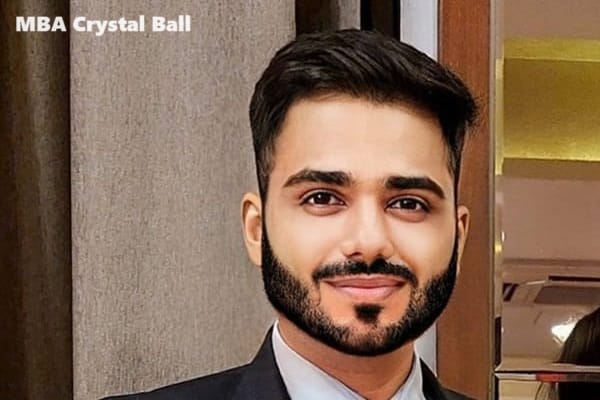
I grew up in Mumbai, and did my schooling in Arya Vidya Mandir, Juhu (ICSE), Mumbai. I grew up in a middle-class financial environment. Neither well off, nor challenging.
As a student, I was lucky to have got some great teachers. A significant memory from my childhood involves my 10th grade English teacher and my school biology teacher. Despite not being in the best of health, they went above and beyond to support my studies.
Their dedication and encouragement inspired me to challenge myself, resulting in my highest marks in the ICSE board exams for biology and English. Their unwavering support and guidance were instrumental in my academic success. I got 92% marks in ICSE, 10th Standard Examination.
I was involved in several extracurricular activities too. I organized a Blood Donation Drive and Innovation Health Camp in collaboration with the Committee of State Blood Transfusion, Government of Maharashtra, with participation of over 60,000 voluntary blood donors in 2014.
I was recognized for excellence in cultural and placement committee roles during undergraduate college in 2014.
First MBA experience
After completing my Bachelors in Pharmacy (B.Pharm), I decided to pursue an MBA in Hospital and Healthcare Management.
My undergraduate studies had given me a solid foundation in the healthcare sector, and I wanted to build on that by gaining expertise in management and consulting within this industry. An MBA seemed like the perfect pathway to achieve this goal.
Choosing a specialized college for my MBA was a strategic decision. I was particularly interested in healthcare consulting, which requires a unique blend of medical knowledge and business acumen.
My MBA program offered me the opportunity to delve deeply into the specifics of healthcare management, preparing me for a career in this niche but rapidly growing field.
During my MBA, I had the opportunity to learn from industry experts and participate in various projects that simulated real-world healthcare management scenarios. This hands-on experience was invaluable and further cemented my desire to work in healthcare consulting.
Recruitment during my MBA was a pivotal moment. I was fortunate to get placed in Deloitte Consulting. This was a significant milestone for me as it aligned perfectly with my career aspirations.
Working at Deloitte has been an enriching experience, allowing me to apply my knowledge in a practical setting and contribute to meaningful projects in the healthcare sector.
The healthcare sector in India offers a plethora of career opportunities. There is a growing demand for healthcare consultants who can help organizations navigate the complexities of the industry, improve efficiency, and enhance patient care.
This dynamic and evolving field promises a rewarding career path, with opportunities to make a significant impact on public health and organizational success.
Overall, my decision to pursue an MBA right after undergrad has been incredibly fulfilling. It has not only advanced my career but also positioned me to make a meaningful contribution to the healthcare sector.
My first job
I was fortunate to start my career at Deloitte Consulting India, where I was immediately sent to the US for training to get certified in Epic, a leading EMR system in the USA.
This training was essential as my clientele consisted primarily of leading healthcare organizations from the USA.
My role began as a Business Technology Analyst, focusing on optimizing the Electronic Health Record (EHR) experience for our clients by providing tailored solutions.
In 2022, I was promoted to Consultant, and I have had the opportunity to work across two major Deloitte locations: Bangalore and Hyderabad.
The job has its challenges, particularly due to the nature of our work involving Protected Health Information (PHI) and Personally Identifiable Information (PII).
We worked out of an offshore dedicated center where we had no access to our phones during the 9-hour work shift. Despite this, the camaraderie, and friendships I formed ensured I never felt disconnected.
Additionally, our leadership frequently visited us, ensuring we never dropped the ball and stayed motivated by regularly recognizing our hard work.
The dynamic nature of the work meant I faced steep deadlines and complex projects, including being the point of contact for multiple implementation projects.
Through patience and perseverance, I successfully completed these projects, earning accolades from both Deloitte leadership and client leadership.
Why Second Masters
The reason I pursued a second master’s degree is that I aspire to transition from a healthcare consultant role to a leadership position at Deloitte.
To achieve this, I need to upgrade my skills in areas like Project Management and Data Analytics and learn new subjects like Machine Learning.
I believe a Master’s in Health Informatics will best help me achieve these goals, providing me with the advanced knowledge and expertise needed for a leadership role.
Reason why my GRE score was low
I scored 293 on my first attempt and 300 on my second attempt at the GRE.
Although these scores might seem modest, they don’t reflect my true capabilities and determination.
During my preparation, both my parents contracted COVID-19 and were hospitalized, with my father in the ICU. I was alone at home, juggling work and preparation, which inevitably impacted my performance.
Despite these challenges, I remained focused and resilient.
Given my background and aspirations, my primary concerns regarding my application were my relatively lesser work experience and my modest GRE scores.
Many applicants with 7 to 10+ years of experience were able to secure waivers, which made me anxious about the overall strength of my application.
To address these concerns, I decided to work with admission consultants rather than proceeding independently or relying solely on networking.
Hello MBA Crystal Ball!
Through extensive research on the internet, I discovered MBA Crystal Ball (MCB).
They had a strong reputation for their comprehensive training, essay preparation, and overall guidance, which significantly improves candidates’ chances of getting into their dream colleges.
I selected MCB for their expertise and track record in helping applicants like myself.
I signed up for their services, including profile evaluation, essay editing, and interview preparation.
MCB’s structured approach and personalized feedback were instrumental in refining my application strategy.
I worked with Mr. Mehul Dixit, my designated consultant.
MCB began with a ‘Meet Me’ document and a one-on-one session with Mehul, which helped him understand my background and tailor the application process accordingly.
The experience was great. At that time, I aimed to apply for the Master of Health Informatics program at the University of North Carolina Chapel Hill.
The approach was systematic: I would draft my SOP/Essay, and Mehul would refine it, with weekly touch base sessions for edits.
Unfortunately, UNC required additional information, like the reasons for my modest semester marks.
I had been hospitalized twice for dengue during my B.Pharm and MBA, which affected my performance during those semester exams.
Since I missed contextualizing my GPA it lead to the rejection of my application for the spring 2024 intake.
Second time’s a charm
Using the same foundational points and techniques that I had learnt while working with MCB, I re-applied to UNC and added this additional context to my application.
I also chose to apply to Northeastern University Boston, owing to its Carnegie R1 classification, high research activity, co-op program, and distinguished professors.
I applied to two schools this time for Fall 24: the University of North Carolina Chapel Hill and Northeastern University Boston, ranked #22 and #53 respectively by US News.
The criteria for selecting them included strong health informatics programs, research opportunities, and their overall reputation.
Conversations with current students and alumni revealed insights not easily found online, such as the supportive community and the hands-on learning experiences in their programs.
Rejection and Re-applicant Strategy
The initial rejection from UNC was a setback, especially after the efforts Mehul and I put into refining my application.
However, I stayed calm and immediately applied for the fall of 2024 after the spring 2024 attempt.
This time, using the SoP writing skills I had picked up while working earlier with MCB, I contextualized my GPAs and provided the necessary explanations for my academic performance.
Celebration time!
I got into both universities but ultimately chose Northeastern University Boston.
The factors included its Carnegie R1 classification, high research activity, co-op program, and distinguished professors.
Additionally, the flexibility to choose from three tracks made it the best fit for my career goals.
What helped differentiate me from other Indian applicants was my unique blend of experiences in healthcare consulting and the challenges I overcame during my academic journey.
In hindsight, I learned the importance of contextualizing every aspect of my application and the value of seeking expert guidance.
The journey has been one of immense growth and resilience.
For international master’s aspirants from India, particularly those from Pharma / Healthcare backgrounds, my advice is to approach the application process with thoroughness and seek professional guidance when necessary.
It’s crucial to articulate your academic and professional journey in detail, emphasizing the unique insights and experiences gained in this recession-proof field.
Healthcare is witnessing exponential job growth globally, with projections surpassing its current industry growth rate of 15%, thanks to ongoing advancements.
Whether in India, the USA, or elsewhere, healthcare remains a niche and pivotal field, fostering the development of top-notch consultants.
The state-of-the-art knowledge and hands-on experience acquired through education and professional roles in healthcare will undoubtedly set aspirants apart in their career journeys.
If you’re applying for international masters (MS) programs, MBA Crystal Ball can help you learn the art of writing SoPs. Send us an email: info@mbacrystalball.com
