
“What’s a Flex MBA program?” would be a good question ask.
We already had online MBA, full-time MBA, part-time MBA, executive MBA and other variations of the management degree – each catering to a different set of professionals.
A flexible MBA program (or flex MBA) is a hybrid degree offered by some universities hoping to combine the benefits of all the other degree formats.
In a nutshell, a flex MBA is a part-time degree that covers the full-time MBA curriculum, with online classes, campus electives and in-person weekend sessions.
Avi Chawla chose to apply to one such top flex MBA program. The CMU learning engineer will become a CMU student soon. He explains his motivations for choosing a part-time flex MBA over a regular full-time MBA.
Why I chose Flex MBA program over Full-time MBA
by Avi Chawla
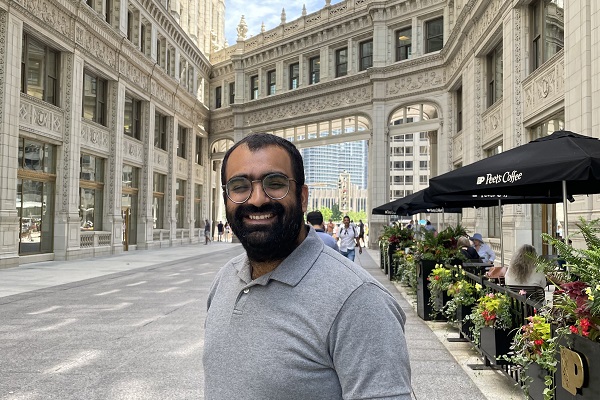
I would describe myself as persistent, a go-getter, and curious. I am an avid sports fan and the best memories of my childhood have been playing all sorts of sports (especially cricket) in my school, with friends and family.
I am in the Edtech industry and currently work as a Learning Engineer at Carnegie Mellon University.
Access Free Frameworks →
In my current role, I work with faculty from all over the university to design courses for online programs of the university.
The best part of this job is that since I work with faculty from all fields, I get to learn a lot of new things every day from all the disciplines.
Also, the fact that the work I am doing is creating an impact for a large number of students is very rewarding.
With all the benefits come challenges also, the biggest being that this role requires managing expectations for a lot of stakeholders. This requires a lot of coordination and patience.
The seed of my choosing to become an instructor after graduating with a degree in chemical engineering from Thapar University was sown when I got the opportunity to teach underprivileged kids as a part of an NGO during my college only.
I thoroughly enjoyed that experience and it felt very satisfying and rewarding. I continued to do that throughout my college and decided to become a chemistry instructor at Allen Career Institute. This allowed me to follow my love of teaching along with earning a good salary.
Why a Master’s degree in Learning Sciences and Education Technology
While I was teaching at Allen Career Institute, which is primarily an offline coaching center, I got the opportunity to teach online with an ed-tech startup Vedantu.
The experience of teaching online made me realize how big of a role technology can play in delivering effective learning experiences. In this online set up I was teaching students from all over the world.
I was also teaching students from tier 2 and tier 3 cities in India who might have missed an opportunity to receive a quality education without these technologies. Hence, I decided to pursue a master’s degree in Learning Sciences and Education Technology.
My main criteria for the program were that I could learn how we can apply Cognitive psychology and Learning science to design effective learning experiences.
Also, another factor was that the program should be STEM-designated. After research based on these criteria I applied to three programs.
- METALS program at Carnegie Mellon University
- DMDL at New York University
- LST program at Worchester Polytechnic Institute.
I got admits from NYU and WPI. From these two the criteria for selection was the city since both of them have very similar curricula. Yes, the program did deliver on what I had expected and was a great experience for me.
Part-time Flex MBA vs EMBA vs MBA
Since my current role is basically a service role and I want to transition my career to a more product-focused role and become a product manager that is the reason I have decided to pursue an MBA to advance my career.
Since MBA degrees are very expensive, that is the reason I decided to pursue a Flex MBA over a full-time MBA.
My full-time job will provide me with financial stability while I pursue an MBA degree and I think that is the biggest benefit of a flex MBA over a full-time MBA.
Having said that, my criteria for selecting the flex MBA program was that the curriculum of the flex MBA program should be exactly the same as the full-time program.
No compromise in that in terms of the rigorousness and quality of the program.
A lot of times the difference between MBA, EMBA, and Flex MBA at different schools is that the flex/EMBA are not of the same quality and the curriculum is different from the full-time MBA.
Searching for part-time flex MBA programs that didn’t require GMAT
It was during the pandemic that a lot of schools started offering GMAT waivers and one can easily find out on the program’s website whether they are offering GMAT waivers or not.
Looking at the details on the website which explained the criteria for qualifying for GMAT waivers I felt that with my background and experiences, I will qualify for the waiver.
Then I reached out to one of the admissions committee members to have a chat and asked him to roughly evaluate my profile and he gave me an idea that he feels I will qualify for the GMAT waiver and I did.
Also I did send in my expired GRE score actually which I had taken for my 1st master’s admission.
Compensating for my low GPA in undergrad
I had only one concern which was my low GPA in undergrad. But my master’s degree GPA was excellent. So I was somewhat confident that it shouldn’t be a big of an issue as my master’s degree is also in the STEM field.
As far as my offbeat experience and non-traditional profile is concerned, I was very confident that it would play to my strengths actually as the top international business schools do look for people from various and unique backgrounds.
I got a strong referral for admissions consulting
While talking to my cousin who completed his MBA in 2018, he suggested that I should definitely work with consultants for my MBA applications.
And since I was only applying to one school it definitely made sense to work with professionals to put in my best application to maximize my chances of acceptance.
My cousin had already worked with MBA Crystal Ball (MCB) and had a positive experience.
So on his recommendation, the choice was clear for me to work with MCB for my application. I signed up for 1 school package with MCB.
I worked with Avinash Kaparekar on my application. It was a great experience to work with him.
I really like the process in which this works which I would describe as iterative refinement.
The feedback which Avinash provided was very succinct and clear in getting the essay in its best form possible.
Avinash having the experience of working with many students on their applications knew exactly how to structure the essays and build up my story.
Working on the resume for this application was one big ‘aha’ moment for me, which I feel I could not have done on my own.
His suggestions and the template provided by him took my resume to a really solid level.
Tepper Part-Time Flex MBA application
I applied to only one school i.e. Tepper School of Business at Carnegie Mellon University.
My criteria for selecting the Tepper Part-Time Flex MBA was simple because I did not want to move to a different place to do my MBA.
And Tepper’s part-time flex MBA program is effectively the same as full-time MBA program because it allows you to take classes in person.
Also, since I work at CMU, I get the benefit of doing the MBA at a very very low cost.
I got a call for an interview within a week of the application deadline. My interview lasted for about 40 minutes and the interviewer had a pretty solid background of being a member of the admissions committee for many years.
It was majorly a behavioral interview and most of the questions were sort of based on the essay prompt only and other general behavioral questions.
I got my results within 3 weeks of my interview and I was ecstatic when I heard the news that I was admitted to the program.
I got into the only school I applied to!
I will be starting the program in late August 2023.
Closing thoughts
I feel my profile was not a typical profile of an Indian applicant which was the differentiation point.
The one and only piece of advice I would give is that try to talk to as many people as you can who are related to the program and gather the information to decide whether it is a right fit for you or not.
As much it is up to business school to decide whether you are worthy candidate or not, it is up to you as well to decide whether the program is best fit for you or not, based on your career and personal goals.
Also read:
– Part-time MBA vs Executive MBA (EMBA) vs Full-time MBA: Which is better?
– Best Part-time MBA in California: UCLA Anderson (FEMBA) and Berkeley Haas
– Is the part-time ISB Executive MBA worth it or not?
– MBA or Executive MBA: Which is better?
– More Executive MBA blogs
