
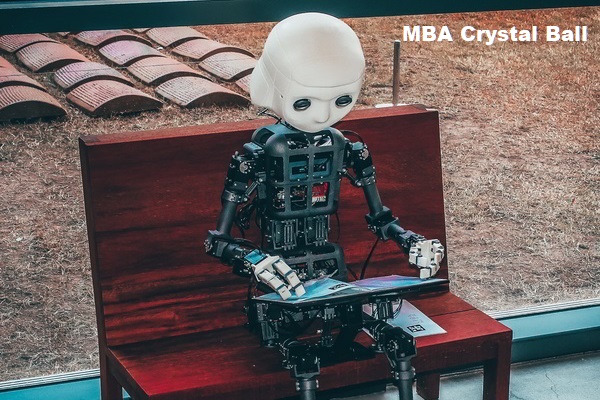
CNN, Harvard, McKinsey, Goldman Sachs, World Economic Forum…choose any credible source of your choice. Based on the surveys and studies they’ve published on how AI will impact jobs, the writing is on the wall. A large proportion of jobs – ranging from 40% to 80% depending on which study you follow – will be lost to AI over the next few years.
So the answer to the big question “Will I lose my job to AI and robots?” is quite likely to be “Yes” for a large majority. It’s more a matter of when, than if.
If that’s the eventuality, what can you do to save your job from Artificial Intelligence (AI) and robots, if you prefer more vivid visuals.
For starters, it would be helpful to understand what AI can do better than humans, and vice versa. Once you know that, the next steps would be easier to chart out.
Let’s break this up into 3 questions:
- What can AI do better than humans?
- What can humans do better than AI?
- What can you do to avoid losing your job to AI?
What can AI do better than humans?
Artificial Intelligence (AI) excels in several areas where it can outperform humans due to its ability to process vast amounts of data, recognize patterns, and perform repetitive tasks with precision and speed. According to Harvard Business Review, experts predict that making use of artificial intelligence (AI) at a larger scale will add a whopping $15.7 trillion to the global economy by 2030. Some areas where AI can do better work than humans include:
Access Free Frameworks →
1. Data Analysis
AI algorithms can analyze large datasets quickly and accurately to identify patterns, trends, and correlations that may not be apparent to humans. This capability is particularly useful in fields such as finance, healthcare, marketing, and scientific research. The growing number of data analysts that companies have been recruiting over the years, is likely to see a reverse trend.
2. Predictive Analytics
AI can forecast future outcomes based on historical data and predictive models. It can be used for predictive maintenance in manufacturing, demand forecasting in retail, and risk assessment in finance and insurance.
3. Repetitive Tasks
AI-powered robots and software can perform repetitive tasks such as data entry, sorting, and assembly line operations more efficiently than humans, leading to increased productivity and cost savings in industries like manufacturing and logistics. This might be the one big area where a substantial number of manual workers will become redundant.
4. Image & Speech Recognition
AI algorithms can accurately identify objects, faces, and speech patterns in images, videos, and audio recordings. This capability is essential for applications such as facial recognition, medical imaging, and virtual assistants. We’ve already seen this being used in mobiles. But the applications of this technology extend far and wide.
5. Natural Language Processing (NLP)
AI models can understand and generate human language, enabling applications such as chatbots, language translation, sentiment analysis, and content generation. ChatGPT is a good example of how powerful NLP based applications can be.
6. Autonomous Self-Driving Vehicles
AI-powered systems can navigate and control vehicles autonomously, leading to safer and more efficient transportation systems. Autonomous vehicles use AI algorithms for tasks such as object detection, path planning, and decision-making. Robots make better drivers than humans. Think Tesla and scale up that possibility to all vehicles.
7. Medical Diagnosis
AI systems can assist healthcare professionals in diagnosing diseases, analyzing medical images, and predicting patient outcomes. AI-powered diagnostic tools can help improve accuracy and speed up the diagnosis process. Which means medical jobs aren’t safe either.
8. Financial Trading
AI algorithms can analyze financial markets in real-time and execute trades based on predefined strategies. AI-powered trading systems can process vast amounts of market data and react to market conditions faster than human traders. This would affect finance wizards who currently work in a range of functions – including equity research and trading.
9. Personalization
AI algorithms can analyze user behavior and preferences to provide personalized recommendations and experiences in areas such as e-commerce, content streaming, and social media. This has widespread applicability and impact.
10. Cybersecurity
AI can detect and respond to cyber threats more effectively than traditional security measures by analyzing network traffic, identifying anomalies, and detecting patterns indicative of malicious activity. This can make an army of cybersecurity professionals redundant pretty quickly.
While AI excels in these areas, it’s important to note that human oversight and intervention are often required to ensure ethical use, interpret results accurately, and address limitations and biases inherent in AI systems.
What can humans do better than AI?
Despite the impressive capabilities of Artificial Intelligence (AI), there are several areas where humans excel and outperform AI. These include:
1. Creativity
Humans possess the ability to think creatively, generate original ideas, and innovate in ways that AI currently cannot replicate. Creative endeavors such as art, music composition, writing literature, and designing novel solutions to complex problems rely heavily on human creativity.
2. Emotional Intelligence
Humans have the capacity for emotional intelligence, including empathy, compassion, and understanding of social cues. These qualities are essential for building relationships, providing emotional support, and navigating complex interpersonal dynamics, areas where AI still struggles.
3. Critical Thinking and Judgment
Humans can evaluate information, weigh evidence, and make complex decisions based on intuition, logic and reasoning. Critical thinking skills are crucial for tasks such as problem-solving, strategic planning and ethical decision-making, areas where AI may lack context and nuance.
4. Adaptability and Flexibility
Humans can adapt to new situations, learn from experience, and apply knowledge in diverse contexts. Humans can quickly adjust their behavior and decision-making strategies in response to changing circumstances, uncertainty, and unexpected events, which can be challenging for AI systems.
5. Morality and Ethics
Humans have a sense of morality and ethical values that guide their actions and decisions. Ethical considerations such as fairness, justice, and empathy are essential for navigating complex moral dilemmas and making ethical judgments, areas where AI may struggle due to lack of moral agency.
6. Interpersonal Communication
Humans can engage in nuanced and meaningful communication, including verbal and nonverbal cues, tone of voice, facial expressions, and body language. Effective communication is essential for building trust, resolving conflicts, and fostering collaboration, areas where AI-driven communication tools may lack authenticity and emotional resonance.
7. Cultural Understanding and Contextual Knowledge
Humans have a deep understanding of cultural norms, values, and social contexts that shape human behavior and interactions. Cultural sensitivity and contextual knowledge are crucial for effective communication, cross-cultural collaboration, and global business operations, areas where AI may struggle due to limited cultural understanding.
8. Empathy and Compassion
Humans can experience and express empathy and compassion towards others, understanding and sharing their emotions and experiences. Empathy is essential for fostering human connection, providing emotional support, and building meaningful relationships, qualities that AI currently lacks.
9. Sense of Purpose and Meaning
Humans seek purpose and meaning in their lives, pursuing goals and aspirations that go beyond mere survival. Humans strive for personal growth, fulfilment, and a sense of belonging, driving them to pursue passions, hobbies, and interests that enrich their lives in profound ways.
Now that we have answers to the first two questions, it’s time to address the final, and most important one that you came here for.
What can you do to save your job from AI?
The World Economic Forum has some good news. It feels that in the long run, it’ll be a ‘net positive’ situation for jobs. For every job lost due to AI, there’ll be another one created. But it’ll require a different set of skills.
So what can you do to save your job from AI?
The obvious answer is to build skills in areas where AI still lags behind humans. The answer to the second question (previous section) provides several dots for you to connect.
If you’re still struggling to do that, we’ll make it easy for you. It’s a career that relies on a range of human traits – business management. And if you want to take it to the next level, you could consider entrepreneurship too.
Management roles are relatively more difficult to lose to AI compared to technical jobs.
According to World Economic Forum, the most critical skills for today’s student include analytical (not just data and number crunching) and interpersonal skills as well as the ability to understand and work with technology. Every student, irrespective of the fields they choose, should aim to build these generalist skills to be ready for a rapidly changing future.
Building generalist skills or management skills can take time. So it’s imperative to start the re-skilling journey as soon as you can.
What are the options? Here are two broad ones.
The practical approach
Look for management opportunities at work. Or volunteer for it outside work. That will give you free, practical and real-world experience. The flip side is that you may make more mistakes than others, given your lack of knowledge about business management concepts.
The academic approach
Take up good business degree to learn the basics and build credibility among recruiters looking for managers. That will open up more opportunities and you’re less likely to make rookie mistakes once you’re in the new role. The flip side is the time and cost it takes to graduate from a top business school. A cheaper alternative is to take up short business management courses, like this Mini MBA, to test the waters.
According to World Economic Forum, Future of jobs report 2023, the following skills are judged to be increasing in importance most rapidly between 2023 and 2027: management skills, working with others, engagement skills, self-efficacy, cognitive skills and technology skills.
Here are some ways in which the Mini MBA course can help you develop AI-proof skills:
1. Critical Thinking
Mini MBA emphasizes critical thinking skills, teaching students how to analyze complex business scenarios, make strategic decisions, and adapt to dynamic environments. These cognitive abilities are inherently human and are difficult for AI to replicate.
2. Emotional Intelligence
The course focuses on developing emotional intelligence, including skills such as empathy, leadership, and interpersonal communication. These qualities are essential for effective collaboration, team building, and client relationships. AI lacks the capacity to fully comprehend and express these qualities.
3. Creativity and Innovation
Mini MBA encourages creativity and innovation through hands-on business simulations (you get to run a virtual business!) and real-world case studies. While AI can assist in generating ideas and analyzing data, it often lacks the intuition and imagination necessary to innovate in unpredictable situations.
4. Adaptability and Resilience
In today’s fast-paced business landscape, adaptability and resilience are critical for success. Mini MBA helps students cultivate these traits by exposing them to diverse challenges (academic and practical) and teaching them how to navigate uncertainty and change—an area where AI may struggle due to its reliance on pre-defined algorithms.
5. Ethical Decision Making
Mini MBA emphasizes ethical decision-making frameworks, encouraging students to consider the broader societal implications of their actions. While AI can process vast amounts of data, it lacks the moral judgment and ethical reasoning abilities inherent in human decision-making.
We hope this article has helped you gain a better appreciation of what you can do to save your job from AI. By honing the uniquely human traits and skills we’ve covered, you can position yourself for long-term career success in an increasingly automated world.
Related posts:
– Best degrees for the future
– Impact and implications of ChatGPT on higher education
– How to write MBA Application Essays using ChatGPT?
– Artificial Intelligence Vs Machine Learning Vs Data Science Vs Deep learning
– Top European MBA programs for Artificial Intelligence
– Top MBA programs for Artificial Intelligence in USA
