
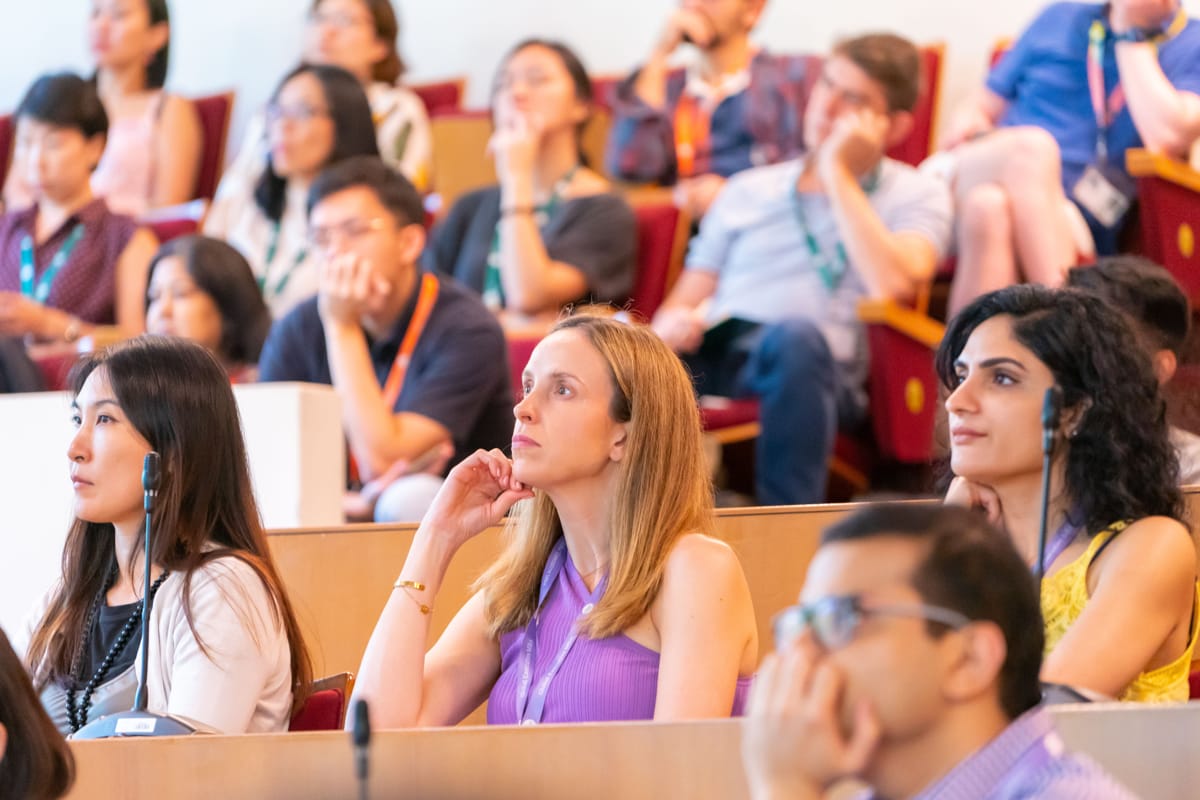
The 10-month INSEAD MBA has consistently ranked among the global top four in the Financial Times MBA rankings for over a decade.
The school with multiple campuses across continents sees a diverse cohort of 900+ with 97% international students coming in from around 90 different nationalities. Students can start the program at the scenic Fontainebleau campus or the vibrant Singapore campus; they can choose to study across campuses. There are 2 intakes, in August and in January.
With more than 170 scholarship funds available, close to 41% of the students receive scholarships with an average scholarship amount of €24,000. The MBA program has a huge diverse alumni network of 72,000 spread across 170 countries.
Here’s how the school performed across key parameters in the Financial Times Global MBA rankings for 2026.
| Percentage employed (after 3 months) | 67% |
| Weighted salary | $217,822 |
| Salary percentage increase | 111% |
| Career progression rank | 41 |
| Alumni network rank | 32 |
| Global carbon footprint rank | 15 |
| ESG & net zero teaching rank | 16 |
The MBA program has long been a top choice for candidates aiming to build a career in consulting. But has that trend continued in a rough job market?
INSEAD Career Development Centre (CDC) Executive Director, Rhoda Yap, joins us to share insights on the most recent MBA career outcomes and how AI is reshaping MBA roles and industry demand.
INSEAD MBA Employment Report 2026
Statistics, Analysis, Trends & Outlook
MBA Crystal Ball (MCB): What surprised you most about the Class of 2025 outcomes?
Access Free Frameworks →
 Rhoda: The breadth. Graduates took roles in 57 countries across every major sector and function – which is exactly what the INSEAD MBA is designed to produce. But I think the more important story is what that breadth signals to prospective students: the labour market for INSEAD MBAs is genuinely global, and you have more agency over your next chapter than you might assume from the outside.
The outcomes reflect the full range of what an MBA can be used for – not just a narrow lane into one or two prestigious firm types.
That diversity is the product, not a side effect.
MCB: Which regions are emerging as strong post-MBA destinations?
Rhoda: INSEAD graduates remain genuinely dispersed. Europe and the UK continue to anchor outcomes at around 44%, with London in particular seeing a notable uptick in tech roles. Asia Pacific holds steady at around 23%, concentrated in regional headquarters and growth-stage companies. Africa and the Middle East at 18% reflects a region that has matured significantly as a destination for ambitious career builders – particularly in finance, energy transition, and infrastructure.
What’s striking across all three is that students are choosing these destinations increasingly on the basis of platform, scope, and growth trajectory – not just compensation headline.
The question ‘where should I go for the best salary?’ is being replaced by a more sophisticated one: ‘where does the role I’m accepting position me for the next transition?’
MCB: Has the geographic pattern of hiring changed, and why?
Rhoda: A few things have shifted. Latin America is up around 4 percentage points, reflecting a combination of deliberate regional career strategies and stronger employer engagement in that corridor. Europe is up about 5 points over the prior class, with London specifically seeing a meaningful spike in tech.
Underneath the numbers, we’re also seeing a structural shift in how people are thinking about geography. The traditional calculus – ‘go where the pay is highest’ – is giving way to something more considered. Students are thinking about mobility, stability, long-term optionality, and what I’d call total career value.
The real return on an MBA is rarely captured in year-one salary alone.
Employers, too, are responding to where demand is. Rather than concentrating talent in a single global headquarters, more organisations are building capability closer to the markets they serve – which creates more entry points for graduates with a clear geographic rationale for where they want to be.
A word on the geopolitical context: the uncertainty is real, and we’d be doing prospective students a disservice to wave it away. But it’s worth naming something that is often underappreciated about INSEAD specifically.
We are the only top business school with significant physical presence – faculty, staff, employer relationships, and alumni infrastructure – across Europe, Asia, and the Middle East simultaneously, and increasingly in the Americas. That is not an accident; it is a structural advantage in volatile times.
Our employer engagement team operates across all of these markets, which means our students have access to opportunities and relationships that are genuinely multi-regional, not aggregated from a single hub. When geographies shift – and they will continue to – the institution’s footprint and the career management skills students develop here move with them.
MCB: Which industries grew or contracted in hiring, and how do salaries compare?
Rhoda: The headline is that consulting remains the single largest destination – half the class, with 23% as new hires and 27% returning to pre-MBA employers. That returnee proportion is worth noting: it reflects a deliberate strategy by firms to invest in their own people through the MBA, and it signals confidence in the INSEAD pipeline even as overall consulting volumes have adjusted.
The volume adjustment is real, and AI is part of the explanation. Firms are recalibrating how many junior hires they need as automation absorbs more of the entry-level analytical load. But I’d be cautious about reading that as structural contraction. There’s an assumption buried in the concern about AI replacing junior consultants – that the grunt work was the learning.
The CDC’s view is that the grunt work was the price of admission to the learning, which actually happened in client rooms, watching senior judgment exercised under pressure. If AI removes that price of admission, junior consultants reach the formative experiences faster.
The firms that redesign their junior learning pathway around that reality will produce better-formed consultants, not fewer of them.
This is a transitional adjustment, not a secular decline.
The broader rebalancing matters too. TMT jumped from 11% to 18%. Finance moved from 13% to 15%. Corporate sectors came in at 17%. That spread signals that the market for MBA talent is genuinely diversifying – students are finding compelling options across a much wider range of industries than the consulting-first narrative suggests.
On compensation: median base salary is €100,000, with a median sign-on of €28,900 and a mean of €102,200. The framing I’d encourage is not ‘which sector pays the highest median?’ but ‘which offer positions me best for what I want to do next?’ Those are often very different questions.
Consulting tends to show the most structured packages. Tech can have a lower base median but higher long-term upside through equity and trajectory. Finance varies significantly by sub-sector and geography. Corporate roles often sit slightly lower on median cash, but offer breadth of exposure and clear leadership tracks that matter enormously for some career objectives.
MCB: How many graduates switched careers – industry, function, or location – and what made the difference?
Rhoda: Around 65% changed at least one of sector, country, or function. About 14% made what we call a triple jump – changing all three simultaneously.
I want to offer a reframe on that statistic, because I think the triple jump has been somewhat glorified in MBA discourse – positioned as the ultimate proof of transformation, the factory reset, the deep plane facelift of a career. That framing isn’t particularly useful, and for some people it’s actively misleading.
The more honest question to ask before an MBA is not ‘how much can I change?’ but ‘what is actually driving the dissatisfaction, and is a change the right response to it?’
If you feel your interests extend meaningfully beyond what your current path offers, if you’re plateauing in ways that matter to you, if the ceiling is structural rather than circumstantial – then yes, a transition may be exactly right. But it should be pursued because it’s the right move, not because the magnitude of the change signals ambition or courage.
What the data actually shows is more nuanced than the triple-jump headline suggests. The aspired transition and the actual transition frequently diverge – in both directions. Some students arrive targeting a single pivot and end up making a larger leap once they understand the market properly.
Others come in with ambitious triple-change plans and discover that a more focused transition positions them far more competitively. The market doesn’t reward the size of the leap. It rewards the quality of the fit.
That process – of stress-testing ambitions against how the labour market actually works — is central to what we do.
The framework we use internally, MATCH, helps students assess five dimensions that determine whether a transition is genuinely feasible: whether you can practically be hired where you want to be, whether your skills credibly signal readiness rather than just potential, whether the role aligns with what you actually want from your working life, how competitive your profile really is against others in the same talent pool, and whether your timing fits how that sector hires.
Most transitions that stall don’t fail because the person lacks ambition or resilience. They fail because one of those dimensions was misdiagnosed. Surfacing that early, when there’s still runway to act on it, is where the real work happens.
MCB: In a volatile market, what’s your advice for career changers who are weighing INSEAD?
Rhoda: Start with an honest diagnosis – not performatively honest, genuinely honest. Not ‘what change sounds compelling?’ but ‘what is actually driving the restlessness?’ Are your interests broader than your current path allows? Are you plateauing in ways that feel structural rather than temporary? Is the ceiling real, or is it circumstantial?
Those are different problems, and they don’t all require the same solution. If the answer is yes – there’s a genuine mismatch between where you are and where your interests and capabilities could take you – then the question becomes whether a transition is the right mechanism, and whether you’re positioned to execute it well. That’s a more useful frame than asking how dramatic the change should be.
Then apply the same rigour outward. Who is actually hiring for the roles you want? What does a competitive candidate look like to them – not in your imagination, but in the actual talent pool you’d be entering? Is your timing aligned with how that sector recruits?
Transitions don’t fail because the market doesn’t need people. They fail because the candidate’s profile didn’t communicate the right signals, in the right channel, at the right moment.
On volatility: it cuts both ways. Uncertainty is real, but so are the openings it creates. Companies restructuring, sectors reorganising, geographies expanding – all of that generates demand for people who can operate across boundaries and make sense of ambiguity. That is not incidental to what an INSEAD MBA develops.
It’s central to it. And when geopolitical disruption shifts where opportunities concentrate – as it has, repeatedly, over the last five years – the career management frameworks and multi-market employer relationships students build here travel with them. That’s the infrastructure that matters when the map changes.
One practical suggestion: you don’t have to wait until you’re enrolled to start pressure-testing your thinking. The MATCH framework is publicly accessible and designed to help you assess whether your intended transition is well-positioned, not just well-intentioned – a useful diagnostic even at the considering-INSEAD stage.
MCB: What are the most common misconceptions or repeated mistakes in MBA recruiting?
Rhoda: Three patterns come up reliably:
Mistaking the brand for the work:
INSEAD opens doors – it creates access and credibility that wouldn’t otherwise exist. But it doesn’t substitute for demonstrated fit. Recruiters expect INSEAD graduates to show up with a coherent story, genuine knowledge of the role and the organisation, and evidence they can perform. The brand gets you the meeting. The rest is on you.
Confusing optionality with strategy:
Students sometimes hold every possible path open for too long – consulting and tech and finance and a startup, simultaneously. That feels like prudence, but it has a cost: preparation for each track is diluted, networking is scattered, and you frequently run out of time.
The research is clear that under time pressure, a focused approach – committing attention to the highest-priority path first while preserving flexibility – produces better outcomes than trying to maximise every option in parallel. At some point, keeping everything open means pursuing nothing well.
Networking as transacting:
The students who build the strongest referral networks treat relationship-building as an end in itself, not as an extraction mechanism. Research on what makes someone referral-worthy points consistently to the same factors: warmth, demonstrated competence, authenticity, and reciprocity. Superficial outreach – the generic LinkedIn message, the information request with no prior relationship – rarely converts. Consistent, specific, value-driven connection does.
MCB: How is AI changing the roles MBA graduates are hired into? Which industries are most affected?
Rhoda:: Two shifts are worth naming clearly. The first is task redesign: routine analysis, synthesis, and first-draft outputs are increasingly automated, which raises the bar for the human contribution. The expectation is now for judgment, interpretation, and decision quality – not just throughput. This is particularly visible in consulting, where delivery models are changing rapidly.
The second is role hybridisation.
MBAs are increasingly expected to lead AI adoption, not just use AI tools.
That means operating model redesign, productisation, data governance, and value capture – functions that require both business fluency and enough technical literacy to credibly manage the work. Speaking tech is no longer a differentiator; in many sectors it’s becoming baseline.
Most affected: consulting (leaner delivery, more technology-enabled problem-solving), tech and digital (AI-first product and go-to-market roles), and finance and risk (automation of modelling and compliance infrastructure, alongside the governance questions that creates).
MCB: Are employers changing how they assess candidates for AI-enabled roles?
Rhoda: The core assessment architecture hasn’t changed, and I don’t expect it to. Competency-based interviewing is one of the most empirically robust tools employers have for predicting job performance – decades of research support its predictive validity, and nothing about the AI moment undermines that.
What employers want to evaluate – judgment, structured thinking, leadership behaviour under pressure, how you handle ambiguity – remains exactly what it was.
The format endures because it works.
There’s also a regulatory dimension that often gets overlooked. Under GDPR’s Article 22, decisions with significant effects on individuals cannot be based solely on automated processing – meaningful human involvement is legally required.
The EU AI Act, which came into force in 2024, goes further: AI used in recruitment and candidate assessment is explicitly classified as high-risk, mandating human oversight, bias testing, transparency obligations, and full documentation of how AI influenced the decision.
With core obligations phasing in through 2026, the regulatory direction is unambiguous – and it runs directly counter to any move toward replacing human interviewers with algorithmic assessment.
The EU is setting the pace globally; no comparable federal framework exists in the US, and other jurisdictions are watching Brussels closely. The human interview isn’t going anywhere – partly because it works, and partly because removing it creates serious legal exposure.
What has shifted is the texture of what those competencies look like in practice. Take problem-solving: the underlying capability is unchanged – can you articulate what you’re solving for, decompose it into tractable parts, make a sound judgment?
What’s new is that one of those judgments now routinely involves knowing which tasks to delegate to AI, which require human augmentation, and which demand purely human discernment. Same competency, richer environment.
The prompting analogy is worth naming directly. Good prompting is just clear thinking made legible – the ability to define a problem precisely, disaggregate it, and specify what a useful output looks like. If you can do that well in an interview, you can do it well with AI. They’re the same muscle.
One honest note: GenAI has made it easier to produce polished-sounding answers with no real thinking behind them. Experienced interviewers have noticed, and they’re probing harder.
Use AI in your preparation by all means – but in service of sharpening your own thinking, not as a workaround for developing it.
MCB: What signals will shape MBA hiring over the next two to three years?
Rhoda: Four I’d highlight, and then something on what this means for how you prepare:
- Selective hiring with stronger rewards for demonstrated impact. 2025 already showed pay resilience alongside cautious offer rates – a dynamic where fewer roles exist but the ones that do are well-compensated for the right candidates. That pattern is likely to persist. Proof of value matters more than it used to.
- AI fluency as a baseline expectation – not for coding, but for leading change: understanding where AI creates leverage in a business, where it creates risk, and how to make better decisions faster as a result.
- Tougher, more forensic assessment. GenAI has increased the volume and polish of applications, pushing employers toward deeper validation of real skills. Expect more case work, more specific probing, and more emphasis on demonstrated track record.
- Continued global dispersion of opportunity. Multi-hub careers, regional HQ roles, and increased weight on mobility, languages, and cross-cultural leadership. The geographic spread of Class of 2025 outcomes is a leading indicator of where hiring is heading, not a historical artefact.
On that last point – mobility – I want to be direct about something. The first question many students ask is: ‘Will the employer sponsor my work authorisation?’
That’s the wrong starting question, and it puts the locus of control in entirely the wrong place.
The more productive questions are: Do you have the business language proficiency to function credibly in that market – not just conversationally, but at the level of negotiation, nuance, and professional register? Can you demonstrate genuine cultural integration, not superficial familiarity? And can you show that you are building a career in that market, not passing through it?
Companies invest in people they expect to stay.
If you arrive looking like a career tourist – someone who will leave once a better option appears elsewhere – the work authorisation question becomes moot, because they’ve already decided against you.
If you can answer those questions well, the work authorisation calculus shifts. The employer starts making a business case for sponsorship, rather than treating it as a barrier. Your job is to make yourself worth the case. The MATCH framework’s mobility dimension is fundamentally about this: building the conditions under which an employer finds it straightforward to hire you, not waiting for permission.
MBA Crystal Ball offers admissions consulting services to ambitious aspirants aiming for the best business schools across the world. Reach out for help: info@mbacrystalball.com
You may be interested in these INSEAD articles:
How INSEAD reviews MBA applications: Admissions Director explains
Here’s what this Apple engineer did to get into Berkeley Haas and INSEAD with a GMAT score of 720
How an Indian musician got into INSEAD and Cambridge with scholarship as a reapplicant
Second MBA from INSEAD with scholarship vs MIT SCM Masters: Indian applicant’s envious dilemma
INSEAD offered ₹16 lakh in scholarship. Should I drop out of IIM Ahmedabad?
INSEAD France vs Singapore campus: Differences and similarities
