
A major concern for many Indian applicants is whether top global business schools accept a 3-year bachelor’s degree like a BSc, BCom, BBA, BA et al.
Well, the answer is yes!
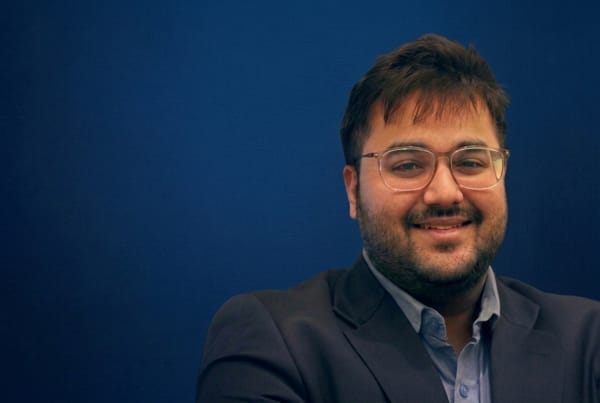
Anshool Harkare did just that. Not only did he secure an admit from Nanyang Business School, NTU Singapore (ranked no. 12 by Financial Times in the Global MBA rankings 2026), but also bagged a scholarship.
Anshool approached us a year before his application, seeking clarity about his career. He then partnered with us to craft his winning application to NTU Singapore. Let’s read how he did it.
Case Study Profile at a Glance
- Applicant: Anshool Harkare
- Undergrad Profile: BSc Economics (NMIMS, 2020)
- Pre-MBA Work Ex: 5 Years in Banking Operations (J.P. Morgan)
- GMAT Focus Edition Score: 665 (Improved from 615)
- Admit Result: Nanyang Business School (NTU Singapore) — Global Rank #12 (FT 2026)
- Scholarship Awarded: Blue Chip Leader Scholarship (approx. INR 8.6 Lakhs)
- Consulting Partner: MBA Crystal Ball (MCB)
MBA in Singapore after a 3-Year BSc Degree from India
Manish Gupta: To begin with, could you share a little about yourself and your qualifications?
Access Free Frameworks →
Anshool Harkare: As you all know, my name is Anshool. I have more than 5 years of experience in J.P. Morgan Chase in the banking operations division. I graduated in 2020 with a BSc in Economics from NMIMS.
I think my undergrad in NMIMS really helped me develop teamwork and public speaking skills because of its heavy focus on presentations and case study. Apart from work, I also really enjoy playing chess and I’m an avid reader, if you count listening to audiobooks.
Manish: So, going a little deeper into your work at J.P. Morgan, explain to us the nature of your work.
Anshool: My primary responsibility has been reconciliation for the borrowing and lending of shares in the London market. Apart from that, I also focus on process improvements, efficiencies, and automation.
So in my time at J.P. Morgan, every day has been a learning opportunity, where I learned something new and the pressure has also been immense at times. But that has also helped me grow a lot, helped me understand where I stand and what I need to improve on as an employee and as a person.
One of the key challenges that I do remember from my time currently at J.P. Morgan is that we have a function that is under immense focus and under the scanner around quarter-ends wherein, because of its regulatory impact, it’s on these quarter-ends that we report these numbers to the regulator.
And the numbers we’re talking about are in the hundreds of millions. On quarter-end, you have just a few hours to resolve any pending issues or any sort of breaks in the process that happen on the same day.
So in those few hours, under immense pressure of resolving hundreds of millions of dollars worth of impact, you have to find out what the problem is, how to resolve it, also who has to resolve it and get them to resolve the problem.
So these types of situations taught me how to work with other people and to create that urgency and get results at the end of the day.
From Banking to Business School: The decision to pursue an MBA
Manish: So you had started on your CFA journey. Talk to us about what prompted that decision and then, also when and how you started thinking about an MBA.
Anshool: I started my CFA journey around two to three years back. I completed my CFA Level I in February of 2022. And then, because I continued to work during my CFA, between my exams I needed a lot of time to juggle my CFA preparation and my work. So I did give my CFA Level II attempt, but I did not clear it.
And after completing five years in my current role, which was always the magic number in my mind, I decided that I have enough experience now. I have gained enough leadership experience as well as technical experience and soft skills to now go for an MBA.
Because, for my career goals, the only fastest way to achieve it would be through an MBA now, instead of organically going through the firm. So that’s why I decided to pause my CFA prep and jump into an MBA prep.
GMAT Focus Prep: Improving from 615 to 665 while Working
MG: Got it. Can you share your GMAT prep journey? Because that was, like, the starting point. And I think you also decided to work in parallel with your GMAT prep. So talk us through how that decision-making went.
Anshool: So GMAT again, I started early last year and my first attempt was in April wherein I got a 615. That was because of some mistakes in preparation that I had made and I was not happy with that score.
So I decided to change my approach. I talked to a lot of people who had given the GMAT, improved my way of preparing for the exam, and again in August, I gave my second attempt where I got a 665, which I was happy with. So I decided to stick with that score.
And because it was already August, I had to start my application journey and my prep simultaneously; otherwise, it would be too late. And that meant deciding the universities that I wanted to apply to, making sure all the documents and everything were ready, and that the application was prepared, especially the essay part.
Because that was the major part that I had to work on with my counselor, Avinash. So, while preparing for the GMAT, I was simultaneously making sure my documentation was ready, my application and whatever additional papers I needed were ready, and that I knew exactly which universities I wanted to target and what their requirements were.
So that once my GMAT was done, and once I was happy with my score, I could directly jump into my essays, which do take a lot of time.
Cracking the NTU Singapore MBA Interview & Securing a Scholarship
Manish: And on that note, help us understand, why did you decide to work with MBA Crystal Ball? What kind of services did you sign up for?
Anshool: MBA Crystal Ball was actually suggested to me by a very dear mentor and well-wisher of mine who has been guiding me in my career since I started my undergrad at NMIMS. So he thought that MBA Crystal Ball would be a good fit for me and he suggested that for me.
Because I blindly trust him, I decided to sign up. And of course, he was right again because it was really a good fit, and that’s why I primarily chose MBA Crystal Ball. So I chose the five-school package for essays and the interview package.
I would say it was a really good choice, and it was a really great journey. Because while working with Avinash on the essays, I realized that what I had in mind, what I thought was important, and what the MBA schools were looking for were completely different.
His guidance and his remarks on what I needed to portray in my application, what my story needed to be, and the way we sculpted the story, turned out honestly, better than I had expected.
Of course, the MBA application journey is full of ups and downs. The essay editing process, especially for the first essay, almost took a month, and I was obviously told by Avinash, and by you as well, that the first one always takes that much time. But working with Avinash for that month really, really paid off because of how my story was sculpted.
There were a few stories or experiences that I thought were not required for me to portray. But then he prodded me on them, and he made sure I told him everything, every little story.
And one of them did turn out to be quite a significant topic in my essays that really made me stand out in the application. That guidance was something that I really appreciated because I had no idea what was important and what was not.
Manish: And on that note, when you were going through the process, what were your concerns and how did you think you stood out, amongst the larger pool of applicants?
Anshool: When applying for an MBA in Singapore as an Indian student, my primary concern was that schools look for people who have international exposure or who have worked abroad with whatever firm they have been with and have been sent abroad, because that is a sure-shot signal that your company is investing in you. Which was something that I was afraid of because I don’t have that particular experience.
But then working with Avinash, I realized that I do regularly collaborate and liaise with people from around the world as a part of my job. So it’s not necessary, especially after 2020, for me to be in that location to show that I have collaborated with those people.
And so I was able to also kind of integrate that experience, those nuances of international exposure and international dialogue that I’d exchanged with people from around the world, and how it was different in the Asian market, how it is different in the American and European markets.
And I think that also really made my application stand out, that sort of having collaborated with people from across the globe.
Manish: That’s a very interesting insight and a very commonly overlooked one, right? That’s great. So where did you apply? What kind of interviews did you have? How was that experience like?
Anshool: So I applied to INSEAD, NUS, NTU, HEC Paris, and ISB. I got a rejection from INSEAD. For NTU, I got the interview call and within a week, I also got their selection email. And I got a scholarship from NTU as well, their Blue Chip Leader Scholarship, which was a big boost to my confidence.
Because after the initial rejection, I was down in the dumps, but then this really picked me up. Currently, I am on the waitlist for NUS and I’m waiting to hear back from HEC Paris. I have also been shortlisted for an interview with ISB which is on Sunday.
Navigating the NTU Singapore MBA Interview & Scholarships
Manish: Excellent. So how much is the scholarship? Also how was the interview experience with NTU?
Anshool: So I opted for the interview package at MCB, working with Avinash, and he had sent me a long list of questions. And the one thing that I really appreciated was there were a few questions that were kind of similar but phrased differently.
So it forced me to kind of think about the same issue from different angles to make a more, well-rounded answer for those issues or for those questions, rather.
So my experience with the interview was quite seamless because I had prepared really well and I had gotten my answers corrected and everything went quite smoothly.
The one funny incident that happened in my interview was that the interview prior to mine was running quite late and so I was stuck in the lobby with one of the AdComs who kept prodding me for questions.
So, of course, as all candidates do, I had prepared one question for if they asked me, “Do you have any questions for us?” So after that question, when she asked me, “Okay, what next? Do you have any other questions?”
I had to just dig deep and make up questions from NTU’s curriculum that I had studied and ask questions about that. Since I had gone through the curriculum, and because of the questions that Avinash had prodded me to look into, I was thankfully able to ask a few more questions and gain insights into the curriculum, the scholarships, the type of alumni and stuff like that.
And once my interview started, it was around 15 minutes with just, “Introduce yourself,” “Any leadership insights that you have?” and “What is your leadership style?” and all these questions that I was prepared for.
Once that was done, they again asked me if I have any questions for them and I just said, “I have asked the wonderful Miss Helen (who was the AdCom) all the questions that I have,” and that was it. So, after the interview, within a week, I got their selection.
Manish: And was there a separate process for the scholarship? How much was the scholarship amount that you were eventually granted?
Anshool: The scholarship is around INR 8.6 lakhs, right off admission. So, you had to write a separate essay for the scholarship, and you had to indicate the type of scholarship that you were applying for and were eligible for.
Then they would basically select which scholarship you are the most eligible for, if they do decide to award you one. And the scholarship email comes in around a week and a half post the selection.
Key Advice for Indian Applicants: Finding Your “Why MBA”
Manish: And that’s a nice cherry on top! Now having achieved this, as you look back, one or two things, you think all applicants should keep in mind, especially for people coming from banking or tech backgrounds? Any insights you can share?
Anshool: On the mentality side, it is very easy to sort of pin your self-worth to the results of these applications, which is something that you should avoid. I know it’s easier said than done because I have done it myself as well, but you have to kind of separate yourself from that.
Because at the end of the day, it is nothing personal. These applications, your acceptance or rejection, do not mean that you’re not worth it or that your experience has been for naught.
So, it is very important to stay confident, stay true to yourself, and make sure that an application acceptance, rejection, or waitlist does not really affect your cycle because that’s just one rejection. So, you do have to move on to the next school as well. You can’t stay down in the dumps just because you got rejected from one school.
And on the technical side, I would say, before you even start your MBA prep, you should ideally know why you want to do an MBA. It should be a very strong reason as to why you want to do it because that is one question that is definitely asked, not only in the essays but also in the interview.
And that is one question that is common across all schools; it doesn’t matter which geography. So your reason for an MBA, whatever it may be, should be very clear to you. There’s no strong reason or weak reason, but it should be very clear to you.
Also take some time to reflect on your life and your journey, not just your professional journey, but your personal experiences, your extracurriculars, your experiences with moving across cities, or just your experience growing up. Reflect on that as well before or while you get into the MBA application cycle.
Manish: Excellent! Thanks so much for sharing those experiences, Anshool. We’ll be closely watching your career progression. All the best and stay connected.
Anshool: Sure. Thank you.
At MBA Crystal Ball, we’ve helped thousands of applicants get into elite business schools, often with scholarships. Reach out to us at info@mbacrystalball.com if you’re looking for professional help with your applications. Good luck!
