
For MBA aspirants, the choice of programs is mind-boggling and the factors they need to consider can be equally confusing. Among the hundreds of parameters a prospective candidate could consider, a few tend to come up more frequently than the others. Let’s look at some of those.
How important is accreditation?
For years, international accreditation of Indian business schools have been seen as a potential game changer – something that could persuade Indian students to study locally rather than look abroad. But when we look closely at how applicants actually make decisions, a very different picture emerges.
For the applicant pool that we interact with – those aiming for top-tier, internationally ranked business schools – we do not see any considerable change in how international accreditation affect business school choices. In fact, accreditation rarely come up as a deciding factor during conversations with serious MBA aspirants.
What continues to matter far more are rankings, branding, and industry relationships. Indian business schools already have a well-established pecking order that has been built over decades, and this perception continues to sway applicant choices far more than any additional international stamp of approval.
However, the recent years have seen a significant global decline in the proportion of candidates who consider program rankings among the top factors – from 37% percent in 2023 to 29% in 2024, according to GMAC Prospective Students Survey.
A shift in how MBA rankings are viewed
There has been a subtle yet consistent change in how Indian applicants evaluate MBA programs. In the early years of MBA Crystal Ball, we came across many who followed a Top-10-or-nothing strategy. Today, applicants are becoming more conscious of other factors that truly matter.
At the top of that list is return on investment (RoI). The GMAC Prospective Students Survey found that the ROI of graduate management education (GME) remains the most considered factor among candidates and has seen a 4-point rise from 38% to 42% (from 2023 to 2024). This includes the skills they’ll develop and their future opportunities.
Access Free Frameworks →
The second most-researched aspect is the career outcome (jobs and salaries) and has seen a 2-point rise from 37% to 39% during this 1-year period.
Business schools that offer quality education along with access to strong post-MBA career opportunities are seeing a rise in demand, even if they don’t sit at the very top of global rankings. This shift reflects a more pragmatic mindset among Indian applicants, especially those who plan to fund their education through loans.
Business School Perspective
MBA Crystal Ball (MCB) got in touch with the Georgetown McDonough careers team to gain additional insights. In the recent FT 2026 rankings, their MBA program shows strong performance in salary percentage increase. We spoke to Laura Venos, Senior Director of Career Curricula and Communications at the McDonough Career Center.
MCB: Given the current geopolitical and economic shifts, how have applicants’ priorities changed – particularly around career goals, industry preferences and post-MBA geography?
Laura: We’re seeing candidates approach the MBA with greater openness and intentionality. While consulting, finance, and technology remain the most desirable industries, rather than pursuing a single, predefined path, many are focused on building transferable skills they can apply across sectors and geographies.
There’s also increased awareness, especially among international students, of how geopolitical dynamics shape career mobility. At Georgetown McDonough, this aligns closely with our emphasis on developing globally minded leaders who are prepared to navigate complexity and pursue impact across multiple pathways.
MCB: In response to these shifts, how has your MBA program evolved, whether in curriculum, career support, or employer engagement, to better prepare students?
Laura: At Georgetown McDonough, we are constantly evolving our program to meet the current and future demands of global business. Starting this fall, our new MBA curriculum will emphasize flexibility through increased personalization options across core and elective courses, AI readiness, and alignment with career pathways.
We’ve also strengthened support for international students with more targeted guidance on navigating the U.S. job market and global opportunities. Additionally, we’ve deepened connections with our employers and alumni through micro-mentorship initiatives, giving students timely, personalized insights.
Career transitions, compensation, and work permits
When MBA applicants explain to us why they are choosing particular programs, the reasons are remarkably consistent. Most revolve around career change, which includes a transition across industries, functions, or geographies.
Compensation continues to be a major concern, largely because many applicants are financing their MBA through education loans. Closely linked to this is the ease of getting a work permit after graduation, particularly for those considering international programs. The promise of a global career matters, but only if it is realistically attainable.
The changing profile of MBA aspirants
Another noticeable trend is the widening age range of MBA aspirants. We are seeing increased interest from mature professionals who would not typically be considered “traditional” MBA candidates. Many of them feel they missed the MBA boat earlier in their careers and now see the need to acquire a broader business skillset to do justice to the senior roles they are handling.
Interestingly, we also work with a significant number of second-MBA applicants. These candidates already hold an MBA degree but feel the need to pursue an international MBA to gain access to larger, more global opportunities that were previously out of reach.
MBA in India vs Abroad
There are broadly two categories of MBA applicants in India. The first consists of younger graduates who pursue management education immediately after completing their bachelor’s degree. From this group, many are now increasingly looking at international management master’s programs such as the MiM.
The second category includes experienced professionals with five to ten years of work experience. This is the classic MBA demographic. For them, the number of Indian business schools that feature in the Global Top 100 rankings is extremely limited. Apart from ISB and a few top IIMs offering one-year MBA programs, options are scarce. As a result, many applicants in this segment have little choice but to apply to international programs alongside the few top Indian schools.
Why some still choose to study in India
Despite the global pull, many applicants do choose to pursue an MBA in India. The reasons are both practical and personal.
Cost constraints are the biggest factor. When it comes to RoI, very few programs can beat an MBA in India. Tuition fees are significantly lower than those of international programs, and in a growing economy like India, career opportunities remain plentiful despite the temporary setbacks.
Personal constraints also play a major role. Many applicants have dependents (parents or siblings) to support. For them, moving to a far-away country is not just a financial decision but an emotional one. Some even postpone their MBA plans altogether, feeling it would be selfish to leave family responsibilities behind.
Career goals matter too. Not everyone aspires to build a life abroad. Many believe they can achieve everything they want – career growth, financial freedom, lifestyle, family, festivals, quality healthcare, and peace of mind – without leaving their home country.
Financing, scholarships, and risk perception
Scholarships are a high priority for students targeting international MBA programs, but far less so for Indian programs. This is largely because Indian MBAs are more affordable, and education loans are easier to secure.
While some applicants do receive scholarships from top Indian schools such as ISB, the financial resources available to Indian institutions are no match for those of leading global business schools. At the same time, the overall financial risk of pursuing an MBA in India is significantly lower.
With global uncertainty and recessionary concerns looming, post-MBA job outcomes are among the top worries for Indian applicants. Thankfully, India has not been hit as hard as many other popular MBA destinations. As a result, employment outcomes remain a relatively smaller concern for those targeting Indian schools.
When it comes to choosing business schools, for some candidates the focus is primarily on the tuition, debt and payback period; however for others, it is tied to career mobility, brand, location, international exposure, access to global networks and the opportunity to pivot industries and geographies.
To gain a more realistic picture of the employment landscape, it would be a good idea to review the recent employment reports (last 3 years should provide a good indication) of your target business schools and assess key parameters like average post-MBA salaries across industries and percentage of students hired (especially in your target industry/function). Financial Times (FT) also provides deeper insights by reporting salary percentage increase as well as career progression rank.
Connect with our team if you’re aiming for the top MBA programs and confused about what you need to keep in mind: info@mbacrystalball.com
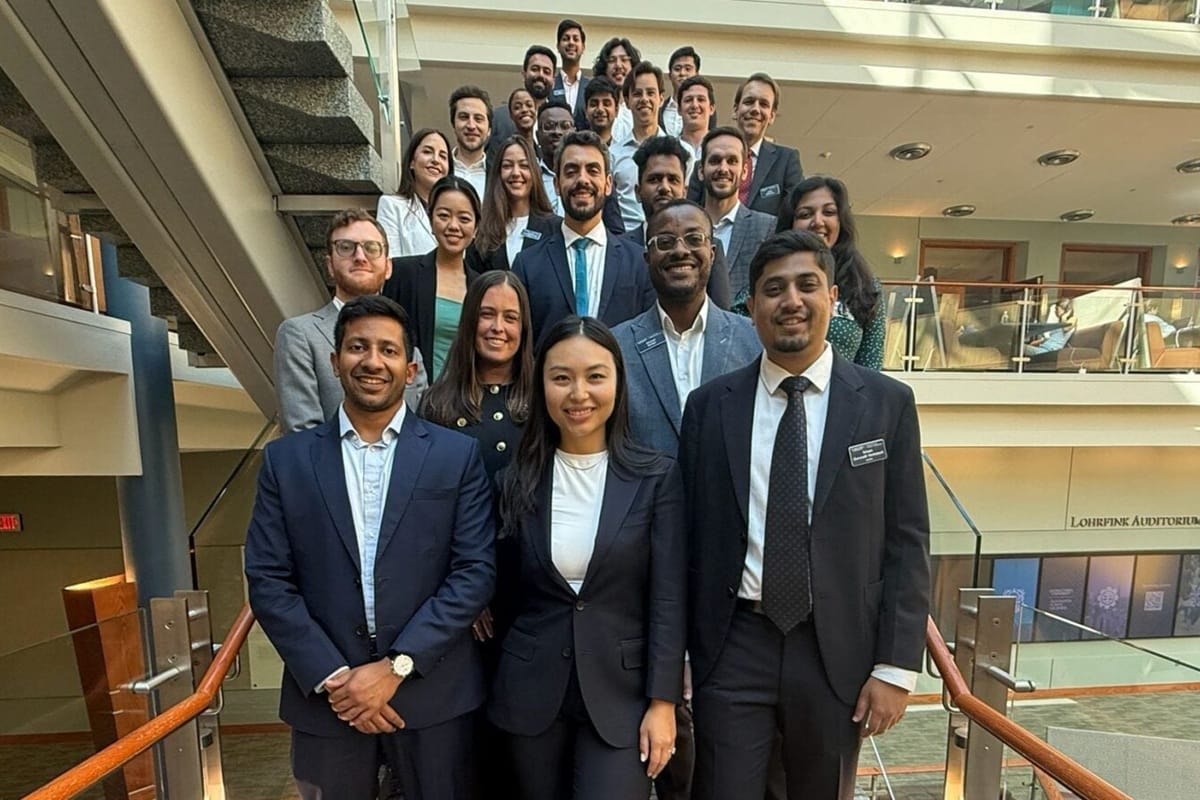
Image: Georgetown University McDonough School of Business
